
Jamaica on track to record lowest murder rate in nearly 40 years
For decades, Jamaicans have carried a silent fear that the headlines would never change. Every year, the murder numbers climbed or stayed painfully high, leaving communities exhausted and families bracing for the next tragedy.
But something unexpected is happening in 2025.
For the first time in nearly 40 years, Jamaica is on track to record fewer than 700 murders. It is the kind of statistic older Jamaicans say they haven’t seen since their youth. And it is the kind of shift that makes you pause and ask: How did we get here?
A Country Tired of Violence Finally Sees a Turn
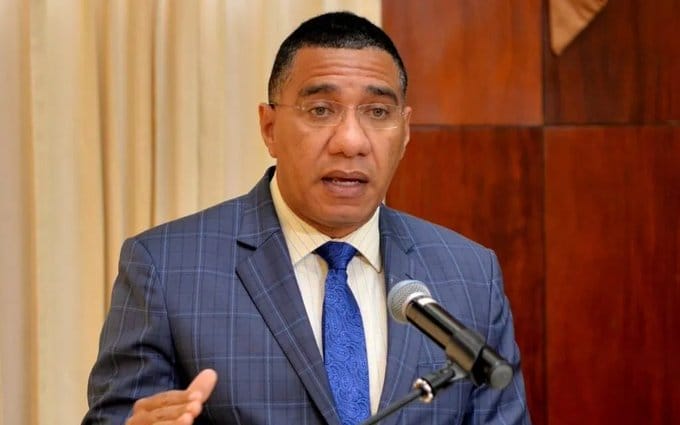
Prime Minister Andrew Holness announced the historic trend while opening the newly rebuilt Little London Police Station in Westmoreland. But this wasn’t just a speech. It was a rare moment where Jamaica could look at the numbers and feel something many haven’t felt in years: relief.
According to the Prime Minister, murders are:
• Down 42 percent this year
• Down 21 percent last year
• Down 7 percent the year before
This isn’t a lucky streak. It’s a pattern.
And patterns tell a story.
The Quiet Investments No One Saw Coming
Over the last nine years, the Government has invested more than $90 billion into national security. For a long time, critics questioned whether the spending was worth it. Now, the numbers are beginning to speak for themselves.
New equipment.
Better training.
Stronger technology.
More structured policing.
A Jamaica Defence Force more integrated into community safety.
It all added up. Slowly, quietly, and now undeniably.
Heroes in Uniform Who Showed Up When It Counted
The Prime Minister highlighted something deeper than statistics. During Hurricane Melissa, when streets flooded and chaos tempted criminals, police officers and soldiers didn’t retreat. They walked into the storm.
He pointed to a team in St. James who stopped attempted robberies in the middle of hurricane winds—officers who could have stayed inside but chose to stand guard for the public instead.
That moment captured something important: a shift in culture. A force no longer operating on fear but on pride.
Police Stations Became Community Lifelines
After Melissa’s destruction, many police stations became the only safe places left standing in several communities. People came to charge phones, find internet access, and get updates. Others simply came because it was the only place that felt secure.
For some Jamaicans, it was the first time they experienced police not as distant enforcers but as anchors—steady, present, reliable.
This Drop in Murders Is Not an Accident
Holness was clear:
This did not happen by chance.
It happened because of direction, discipline, investment, and a force willing to stand in the gaps.
And for the first time in decades, Jamaica can see the results in real time.
The Bigger Question: Where Do We Go From Here?
A safer Jamaica isn’t created in a year. It’s a commitment. A mindset. A collective decision that violence will not write the future. The Prime Minister urged Jamaicans to recognize the progress—not to celebrate too soon, but to support what’s working.
Because when a country has spent nearly 40 years trying to pull the murder rate down, a breakthrough like this is more than news.
It’s a shift in identity.
A moment where Jamaica can look forward and say:
We are not doomed to the headlines of the past.
We can build something safer, stronger, and more stable.
And finally—we’re seeing the proof.
Source JIS


