
Jamaica’s prime minister says the region must move beyond rhetoric and pursue “responsible statecraft” as Cuba’s deepening energy shortage threatens to spill across Caribbean borders.
Holness urged Caribbean Community (CARICOM) leaders on Tuesday to confront the worsening humanitarian situation in Cuba with both honesty and resolve, warning that the island nation’s fuel emergency is not a problem the region can afford to ignore.
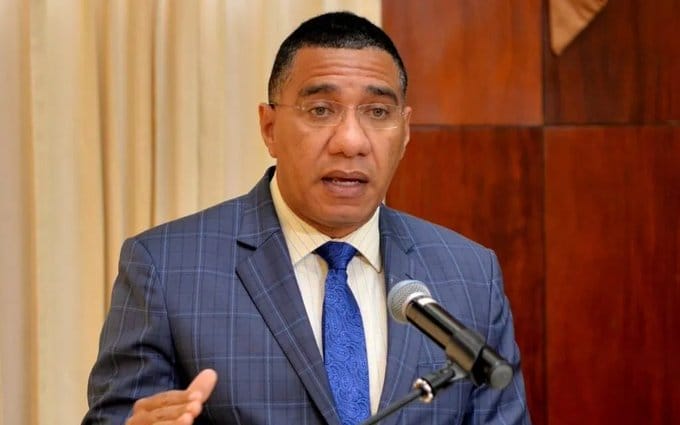
Speaking at the 50th regular meeting of the Conference of Heads of Government of CARICOM in St Kitts and Nevis, Holness said the moment demands action rather than political posturing.
“This moment calls not for rhetoric but for responsible statecraft, even as we encourage support for humanitarian relief.”
Cuba has been grappling with a severe fuel shortage since late January, when U.S. President Donald Trump signed an executive order restricting oil supplies to the country by placing trade pressure on nations that supply fuel to Havana. In response, Cuban authorities have shortened the working week and reduced essential public services to conserve dwindling energy reserves.
Holness acknowledged that Cuba’s medical professionals have long served communities across the Caribbean, and argued that the current crisis carries regional implications that go far beyond the island itself. “It will affect migration, security and economic stability across the Caribbean region,” he said. “It is therefore important that we carefully consider this matter and take collective action.”
Jamaica, he said, supports direct dialogue between Cuba and the United States aimed at reducing tensions and stabilising conditions for ordinary Cubans. “We believe there is space — perhaps more space now than in years past — for pragmatic engagement that protects the Cuban people from any further deterioration in their circumstances and instead promotes national and regional prosperity,” Holness told assembled heads of government.
At the same time, Holness was clear that Jamaica’s solidarity with the Cuban people does not extend to an endorsement of restricted economic or political freedoms. He declared that Jamaica “stands firmly” behind democracy, human rights, political accountability, and open, market-based economies.
“We do not believe that long-term stability can exist where economic freedom is constrained and political participation is limited.”
“Sustainable prosperity requires openness to ideas, to enterprise, to investment and to the will of the people,” he added, framing his remarks as a call for principled but pragmatic regional diplomacy.
The summit comes as U.S. Secretary of State Marco Rubio was expected to travel to St Kitts and Nevis on Wednesday for a meeting with CARICOM heads, adding significant diplomatic weight to the gathering. Regional leaders are meeting under the theme “Beyond Words, Action Today for a Thriving, Sustainable CARICOM.”


