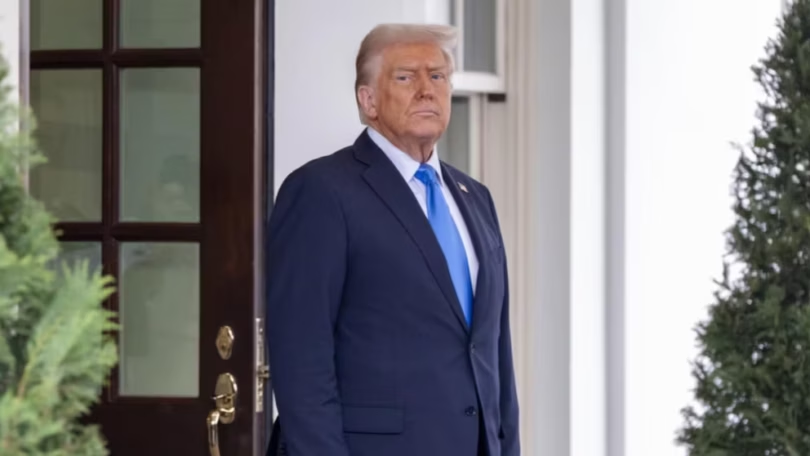

Former U.S. President Donald Trump has ignited a fresh cultural and economic storm by threatening to impose a 100% tariff on foreign films imported into the United States. The proposal, unveiled during a speech in Washington, has drawn swift reactions from Hollywood, international partners, and cultural commentators who fear the move could dramatically reshape the movie industry.
The Proposal
Trump argued that American films face unfair competition abroad, pointing to markets where domestic productions are heavily protected or foreign content is limited. He pledged to “level the playing field” by slapping a tariff on all films produced outside the U.S., effectively doubling their cost for distributors and streaming services.
“This is about fairness for American creators,” Trump said. “If other countries want to block Hollywood, then their movies will pay the price when they come here.”
Potential Impact on the Film Industry
-
Higher Costs for Audiences
If enacted, the tariff could raise ticket prices and subscription costs, as distributors pass along expenses to consumers. -
Fewer Foreign Films
Smaller distributors may struggle to justify bringing international films into U.S. theaters, potentially reducing diversity on American screens. -
Strained International Relations
Countries with thriving film industries — from South Korea to France and India — are likely to view the tariff as cultural protectionism, risking retaliatory measures. -
Boost for Hollywood
Trump’s supporters argue the move could strengthen domestic studios by reducing competition and driving audiences back to American blockbusters.
Reaction So Far
-
Hollywood Split: Some studio executives welcome the idea of shielding U.S. films, while independent filmmakers and streaming giants warn it will hurt artistic diversity and limit consumer choice.
-
Global Backlash: International film associations have already condemned the idea, saying it undermines cultural exchange and violates trade agreements.
-
Economists Cautious: Trade experts note that enforcing a 100% tariff could trigger disputes at the World Trade Organization and open the door to retaliatory tariffs on U.S. cultural exports.
The Bigger Picture
The threat comes as part of Trump’s broader push for aggressive tariffs across industries, from cars to steel. But targeting cinema — one of America’s most successful exports — highlights how cultural products are now front and center in global trade battles.
For audiences, the prospect raises big questions: Will beloved foreign films and series become harder to access? And could Hollywood, already struggling with box office declines and streaming shakeups, actually benefit from less competition?
Trump’s tariff threat on foreign films is more than an economic move — it is a cultural statement. It pits nationalism against globalization, commerce against art, and may determine not only what Americans pay at the box office but what stories they are even allowed to see.
For now, it’s just a warning. But if it becomes reality, the silver screen could look very different in the years ahead.