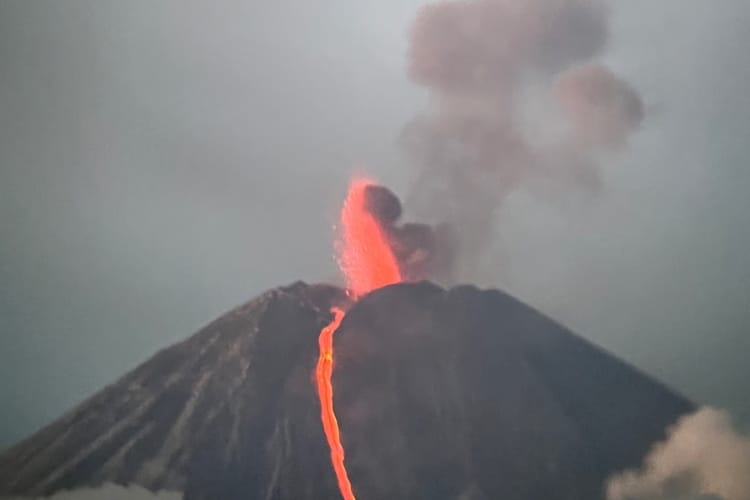

The Volcano That Slept for 600 Years Just Woke Up — And the World Felt It
A powerful 8.8 earthquake. A volcano dormant since the 1400s. Ash miles high into the sky. What just happened in Russia’s Far East could reshape how we think about natural disasters—and how connected they really are.
The Sleeping Giant Awakens
For over half a millennium, Krasheninnikov Volcano on Russia’s Kamchatka Peninsula lay silent. No rumblings. No smoke. Just a slumbering peak frozen in time.
That changed on August 3, 2025.
Triggered by a series of powerful earthquakes—including a magnitude 8.8 mega-quake—the long-dormant volcano erupted for the first time in modern history, sending ash clouds 6 kilometers (nearly 4 miles) into the air.
Scientists estimate this is the first eruption since the 15th century, making it one of the rarest volcanic reawakenings ever recorded.
Where Is This Happening?
The Kamchatka Peninsula is a remote, mountainous region in Russia’s far east, home to:
-
Nearly 300 volcanoes
-
29 active volcanic sites
-
UNESCO World Heritage-listed nature reserves
Despite its volatility, the area is sparsely populated, with no villages or towns located near Krasheninnikov—a fact that likely saved lives.
What We Know So Far
-
Eruption Date: August 3, 2025
-
Trigger: A chain of seismic events, including the 8.8 magnitude quake and multiple strong aftershocks
-
Location: Krasheninnikov Caldera, Kamchatka Peninsula, Russia
-
Impact Zone: No direct threat to humans—ashfall concentrated over uninhabited zones
-
Aviation Risk: Elevated ash warnings for aircraft, with alerts sent to regional flight operations
Ash clouds at 6 km height pose serious threats to aircraft engines, prompting increased monitoring by air traffic controllers across the Pacific Rim.
Tsunami Alerts Across the Globe
The initial 8.8 quake didn’t just shake Kamchatka—it rippled across the Pacific Ocean.
Tsunami alerts were issued in:
-
Japan
-
Hawaii
-
Peru
-
Ecuador
-
Chile
-
Galápagos Islands
Although no major waves materialized, the alerts sparked evacuations and widespread panic—highlighting how interconnected the world is when nature turns volatile.
A Region on Edge: More Than One Volcano Erupts
The Kamchatka Volcanic Eruption Response Team (KVERT) also confirmed eruptions at Klyuchevskoy Volcano, one of the peninsula’s most active. It erupted on the same day as Krasheninnikov, adding to fears that a broader tectonic shift is unfolding in the region.
Some experts believe the earthquake may have destabilized multiple magma systems, acting as a pressure release trigger for previously dormant volcanoes.
What Experts Are Saying
Volcanologists are calling this “a once-in-several-lifetimes” event—and one that may offer crucial insights:
-
Volcanoes don’t erupt in isolation. Seismic activity plays a critical role in shifting magma, opening vents, or creating the right environment for eruption.
-
Dormant doesn’t mean dead. Krasheninnikov hadn’t erupted since before Columbus reached the Americas—and yet, here we are.
-
We need better modeling. If a mega-quake can reawaken a 600-year-old volcano, we may be underestimating how many others are at risk.
Aviation Risks, Global Reactions
While no deaths or injuries have been reported, the eruption temporarily grounded several domestic flights in eastern Russia. International carriers have rerouted flights away from the Kamchatka airspace as a precaution.
Satellite images captured stunning ash plumes, and social media buzzed with awe and fear.
Key question: Could this be a sign of more eruptions to come? Scientists say it’s possible.
Quick Facts
| Event | Details |
|---|---|
| Volcano | Krasheninnikov, Kamchatka Peninsula |
| Last eruption | Over 600 years ago (1400s) |
| Trigger | 8.8 magnitude earthquake + aftershocks |
| Ash plume height | ~6 km (3.7 miles) |
| Tsunami alerts issued in | 6+ countries |
| Casualties | None reported |
| Aviation impact | Flight reroutes, elevated alerts |
Why This Matters Globally
-
Climate & Air Quality: Large eruptions can alter local climates or affect air travel across continents.
-
Preparedness: Few regions have disaster planning in place for events involving dormant volcanoes.
-
Tectonic Chain Reactions: Scientists are watching for similar activity in Alaska, Japan, and even Chile.
The Bigger Picture
Krasheninnikov’s eruption is more than a stunning geological event—it’s a reminder that the Earth’s crust is alive, that history can repeat itself, and that natural disasters don’t respect borders.
In a world increasingly focused on digital threats and AI, it’s humbling to remember that the planet still calls the shots.
Stay alert. Stay informed. And keep your eyes on Kamchatka.