
The Defense Department has released its first full accounting of American casualties since the launch of Operation Epic Fury ten days ago — as the conflict continues to escalate and questions mount over its cost, timeline, and endgame.
The Pentagon released its first comprehensive casualty update Tuesday, confirming that approximately 140 U.S. service members have been wounded since the United States launched Operation Epic Fury against Iran on February 28.
Chief Pentagon Spokesman Sean Parnell said in a statement that the vast majority of those injuries have been minor, and that 108 of the wounded have already returned to active duty. Eight service members, however, remain listed as severely injured and are receiving the highest level of medical care available. A U.S. official told CNN that “severely injured” includes cases where death is considered possible or imminent.
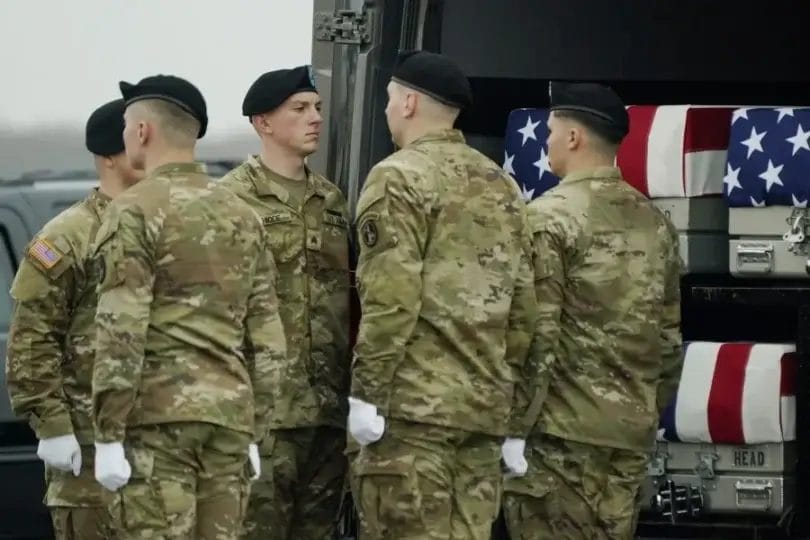
Seven American troops have been killed since the conflict began — the most recent being a Kentucky soldier stationed in Saudi Arabia who died over the weekend after sustaining injuries in an Iranian retaliatory attack.
Ten Days of War: What We Know
The conflict, now entering its second week, has unfolded at a rapid and intense pace. U.S. and Israeli forces have conducted sustained strikes against Iranian military infrastructure, nuclear facilities, naval assets, and government buildings. Iran has responded with waves of missile and drone attacks targeting U.S. military bases in Kuwait, Saudi Arabia, and elsewhere across the Middle East.
Defense Secretary Pete Hegseth told reporters Tuesday morning that the day’s operations would be the most intense yet — more aircraft, more bombers, more strikes, with what he described as more refined intelligence than at any previous point in the campaign.
The human cost on the Iranian side has also been significant. The U.S.-based Human Rights Activists News Agency reported that nearly 1,250 civilians have been killed in Iran since the conflict began. Iran’s Supreme Leader, Ayatollah Ali Khamenei, was killed in the initial rounds of strikes, and the country has since installed his son, Mojtaba Khamenei, as his successor.
Mixed Messages from the White House
Even as the Pentagon provided its clearest casualty accounting to date, the administration continued to send conflicting signals about the war’s direction and duration.
President Trump said Monday that the conflict was “very complete” and would end soon. On the same day, he told reporters the U.S. could declare a “tremendous success right now — or we could go further. And we’re going to go further.”
White House Press Secretary Karoline Leavitt said Tuesday that the administration’s initial timeline was four to six weeks to achieve the full objectives of Operation Epic Fury, and that the campaign was progressing ahead of schedule. She also said Trump does not rule out deploying U.S. ground troops, adding that the war’s ultimate goal is Iran’s unconditional surrender.
The Price Tag Is Staggering
The financial cost of the conflict is drawing increasing scrutiny on Capitol Hill. The Pentagon burned through approximately $5.6 billion worth of munitions in just the first two days of fighting, according to a congressional source. Analysts now estimate the war is costing American taxpayers more than $890 million per day, factoring in air and naval operations, ground forces, weapons systems, and missile defense. Experts warn that figure could rise sharply if the conflict expands or drags on.
Strait of Hormuz: A Global Economic Flashpoint
Adding to international concern, Iran has reportedly begun laying mines in the Strait of Hormuz — the narrow waterway through which roughly 20% of the world’s oil supply passes. The move has rattled global energy markets, sending oil prices surging to nearly $120 per barrel earlier this week before they pulled back following Trump’s comments about a swift end to the war.
Experts caution that even if prices stabilize, the underlying security risk in the strait means elevated fuel costs are likely to persist for American consumers for the foreseeable future.
Congress Demands Answers
Lawmakers on both sides of the aisle are pushing for more transparency. Senator Richard Blumenthal (D-CT) told reporters after a classified Senate Armed Services Committee briefing Tuesday that he was “left with more questions than answers, especially about the cost of the war.” He also said he was more fearful than ever that the president would order U.S. troops into Iran.
Both President Trump and Secretary Hegseth have publicly acknowledged that more American casualties are expected as the operation continues.
Behind the Numbers: The Human Faces of the Conflict
The Pentagon’s casualty figures are more than statistics. They represent husbands, wives, sons, daughters, and parents who deployed to the Middle East amid one of the most significant and rapidly escalating military engagements in a generation. Dignified transfer ceremonies have already taken place at Dover Air Force Base in Delaware, where the remains of fallen service members have been received by their families.
As the conflict enters its second week with no clear end in sight, the question of what victory looks like — and at what ultimate cost — remains unanswered.
This article will be updated as new developments emerge. Information is current as of March 10, 2026.


