
March 2, 2026
Financial markets around the world reacted sharply on Monday as the escalating conflict involving Iran sent energy prices surging and pushed investors toward safer assets.
Energy Markets React Sharply
Natural gas prices in Europe climbed more than 50 percent after Qatar’s national energy company announced it had suspended liquefied natural gas (LNG) production. The halt came after Iranian forces struck facilities at two major Qatari gas processing sites. The disruption added to already mounting supply fears.
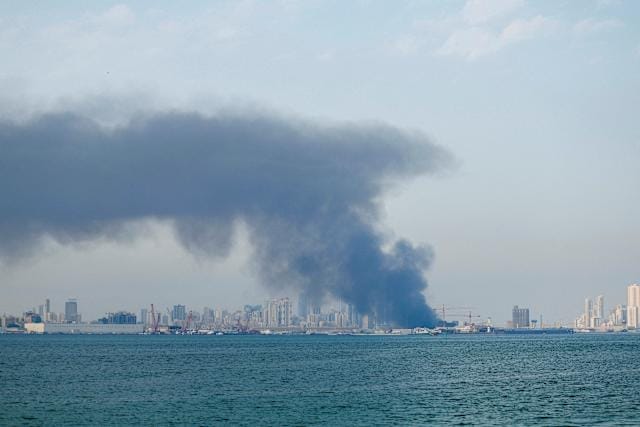
Crude oil futures also jumped significantly — up nearly 9 percent — as concerns grew over the Strait of Hormuz, the narrow waterway through which roughly one-fifth of the world’s seaborne oil travels. The strait has been effectively closed to shipping, with multiple vessels reported to have been attacked in the region.
Stock Markets Fall, Safe Havens Rise
Wall Street opened lower, with the Dow Jones, S&P 500, and Nasdaq each declining over 1 percent. European markets felt a sharper blow, with Germany’s DAX and France’s CAC 40 each falling more than 2 percent. Asian markets also closed in the red.
Meanwhile, gold climbed more than 2.5 percent to around $5,382 per ounce, and the U.S. dollar strengthened against most major currencies — both classic signs of investors seeking security during periods of uncertainty.
Winners and Losers
Not all stocks declined. Energy companies and defense contractors saw notable gains. Shell, TotalEnergies, and ExxonMobil all posted increases, while defense firms BAE Systems and Palantir also rose.
Airlines bore some of the heaviest losses. Carriers were forced to cancel routes and reroute flights away from the conflict zone. Shares in IAG (British Airways’ parent company) fell nearly 6 percent, while Air France-KLM dropped close to 8 percent.
Inflation Concerns Emerge
Economists are warning that a sustained rise in oil prices could trigger a new wave of inflation, complicating the economic picture heading into the U.S. midterm elections in November. Analysts note that if disruptions at the Strait of Hormuz persist, existing global oil reserves and increased OPEC+ production quotas may not be enough to offset the shortfall.
The OPEC+ alliance did announce a larger-than-expected production increase on Sunday, though markets appeared skeptical it would be sufficient given the scale of the disruption.
What Comes Next
Much depends on how long the conflict continues. Economists suggest that a brief disruption of a few days may cause only limited economic damage, but a prolonged closure of key shipping lanes could push oil prices above $100 per barrel and slow global growth considerably.
This article is based on wire reports and market data as of March 2, 2026.


