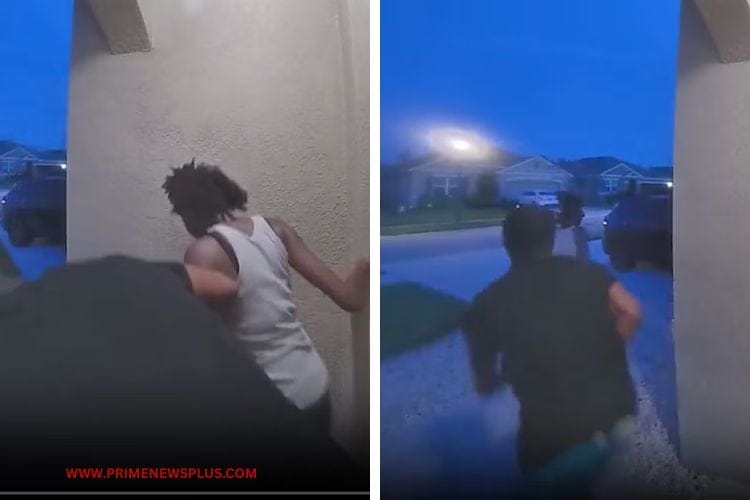

The Door Kick Challenge Could End in Tragedy: What Happens When a Viral TikTok Prank Goes Too Far”
A TikTok trend meant to shock has law enforcement sounding alarms: teens are now kicking in strangers’ doors—and filming it. What started as so-called “fun” across states like Florida, Maryland, and Kentucky has quickly turned into property damage, arrests, and life-threatening situations.
What Is the Door Kick Challenge?
-
Participants storm up to random homes—often in the middle of the night—and kick front doors violently, sometimes busting them down, then flee the scene while recording.
-
Many include props like airsoft guns or masks and share the videos online, hoping for likes and viral clout over actual notoriety.
Real Cases—Real Consequences
-
Maryland: Two teens (ages 14 and 15) were arrested after kicking doors on Sutherland Court and Old Crown Drive around 3 a.m. Police suspect a TikTok link and warned the community of the physical and legal risk.
-
Louisville, Kentucky: Homeowner video captured four masked teens kicking doors around 2:30 a.m. Metro police called the trend “stupid and dangerous”, emphasizing that such behavior could escalate into violence.
-
Arizona (Chandler/Mesa): One family was targeted 18 times in a row—with door-kicking and even electrical panel tampering. Eventually, the household felt unsafe enough to move. Juveniles were charged with criminal damage and harassment.
The Legal Risks: More Than Just Vandalism
-
Burglary & Criminal Trespass: Even if the home isn’t entered, entering the footprint of a property or breaking in can trigger serious charges.
-
Vandalism & Property Damage: Door frames, hinges, thresholds—these repairs are costly, often hundreds or thousands of dollars.
-
Self-Defense Escalation: In many U.S. states, homeowners may legally use force under Castle Doctrine or self-defense laws. Kicking on a door at night could be mistaken for a real burglary and provoke a fatal response.
Why Teens Are Falling for This—and Why It’s So Dangerous
-
Algorithm-driven Peer Pressure: Platforms reward bizarre, provocative content with views and engagement—making physical risk feel worth it.
-
Desensitization: Teens consuming extreme content become numb to consequences, making them more likely to perform risky stunts.
-
Clout Culture: A viral challenge offers a shortcut to “influencer glow”—often overshadowing parental restrictions or common sense.
Expert Warnings: One Move Could Destroy a Life
Titania Jordan, Chief Parenting Officer at Bark Technologies, wasn’t subtle:
“This trend has the potential to end in absolute tragedy. Kids are putting themselves at serious risk…and one homeowner mistake could become irreversible.”
Florida Sheriff Mike Chitwood echoed that sentiment bluntly:
“The Door Kick Challenge is a good way to end up dead.”
In states with tough self-defense laws, homeowners may open fire assuming a home invasion.
How Families Can Stay Safe
| Action | Why It Works |
|---|---|
| Talk openly about social media risks | Teens often follow trends without thinking. |
| Monitor and limit screen time | Reducing exposure lowers temptation. |
| Teach boundary respect and empathy | Help youth understand the human impact of their actions. |
| Ensure clear conversations about consequences | Jail time, damage bills, or worse—let them see the real stakes. |
When a Prank Becomes a Public Hazard
It’s not just home damage—it’s the ripple effect on entire communities:
-
Families traumatized at home.
-
Neighbors frightened in the middle of the night.
-
Real legal trouble for teens and public alarm for residents.
Social media reflection should stop being about performing—and start being about prevention.
It’s All Fun Until It Isn’t
What could look like a prank on your phone might be a felony in real life.
Before taking a step, teens should ask:
Is this worth a viral view—or a criminal record.
Because one night’s “fun” could become a story of jail, injury, or tragedy.


